On Practice: An interview with Laura Lima
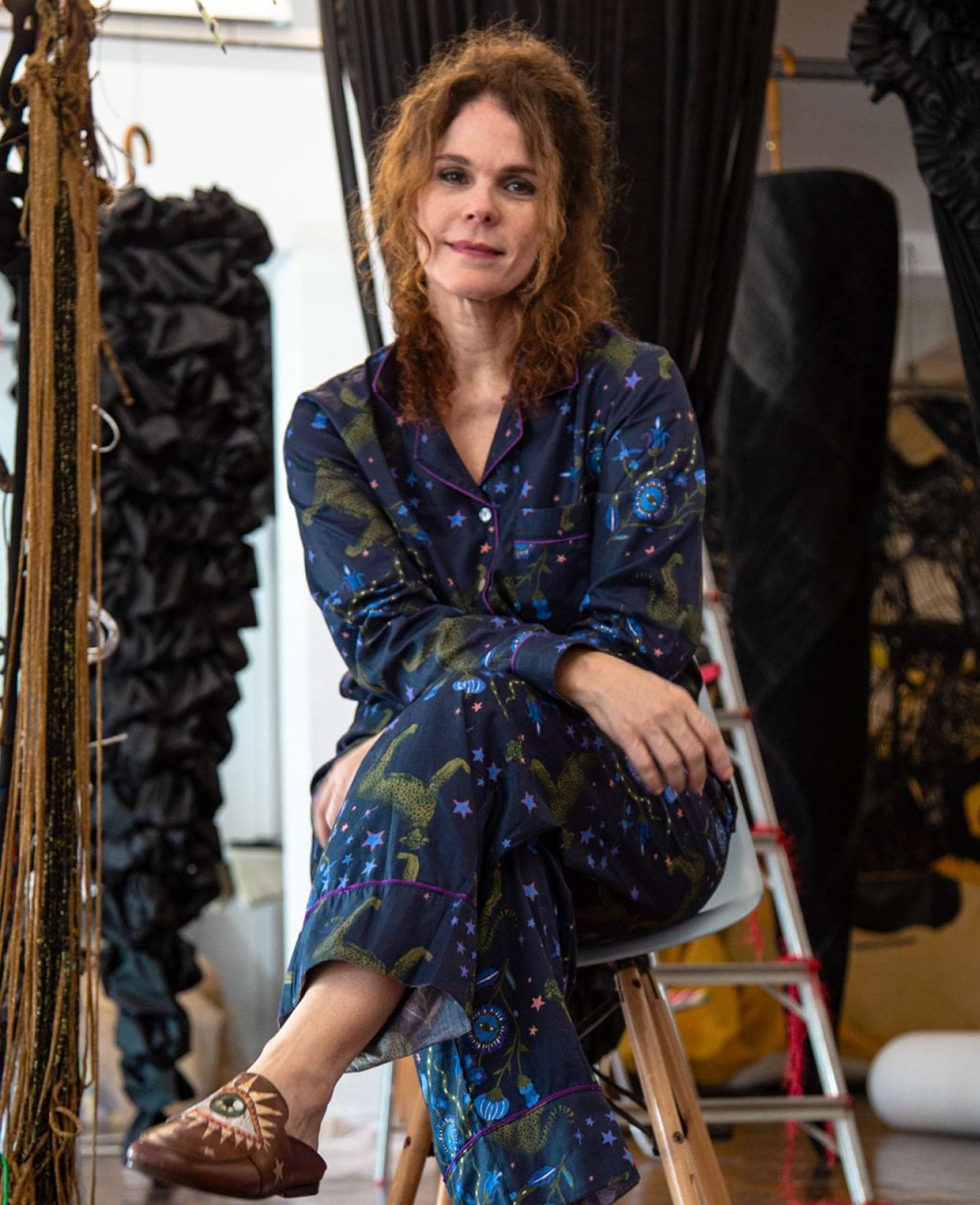
Laura Lima is an extraordinary artist who works across multiple media to explore how human behaviour shapes our perception of the everyday. In this interview, she discusses her deep engagement with organic matter, the role of time as an agent in her work, and her ongoing experimentation with materials. She also shares insights into both the conceptual and physical processes behind the works in her London gallery exhibition, "Communal Nests for Windows, Balconies, Verandas, Gardens, and Forests", as well as her concurrent first UK institutional solo exhibition at the Institute of Contemporary Arts, titled "The Drawing Drawing".
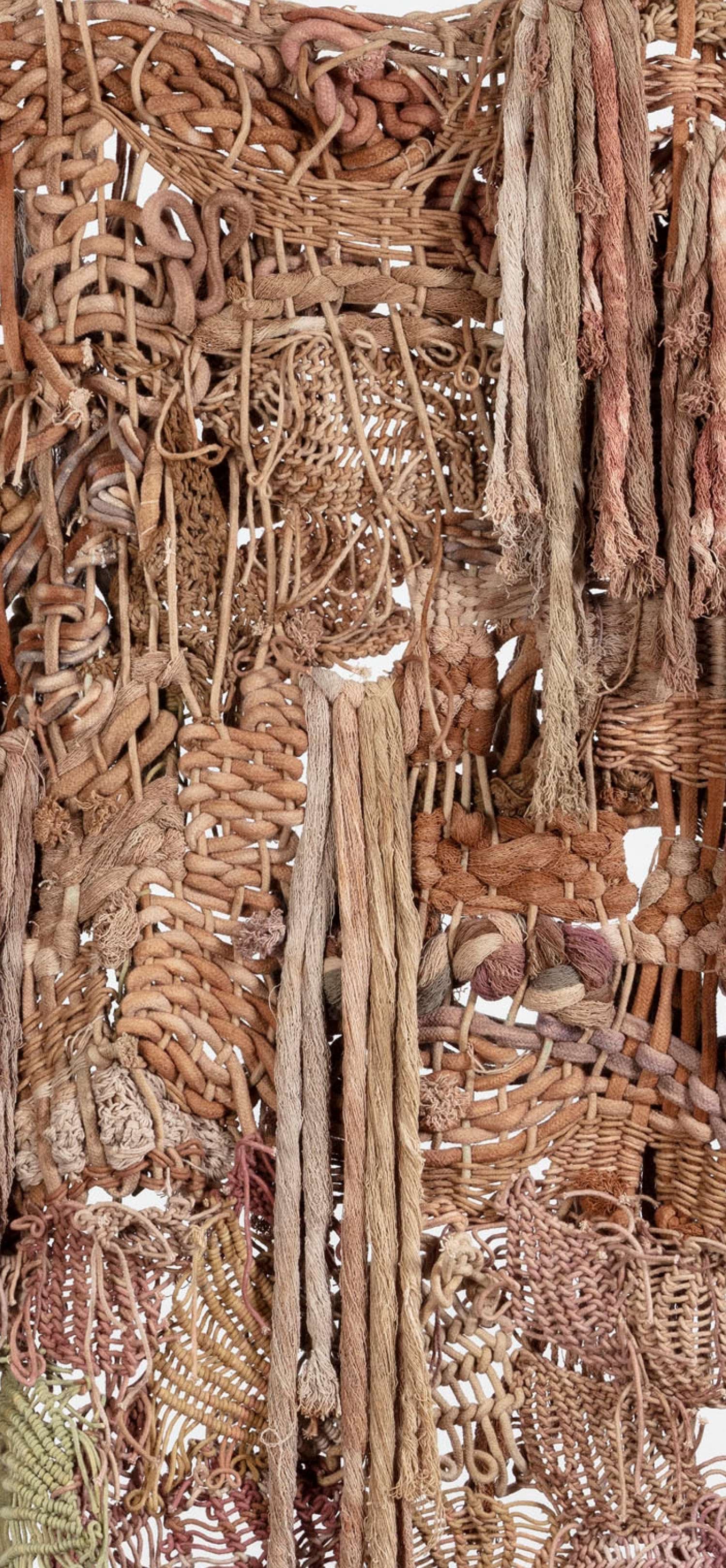
GG You joined the gallery roster in 2024 with your first solo exhibition on the African continent How To Eat The Sun and The Moon. This featured a series of large-scale textile pieces exploring Brazilian folklore, nature and transformation. How did it feel to be showing your work in Johannesburg for the first time?
LL The title of this exhibition, How to Eat the Sun and the Moon, suggests a dimension of landscape that is both external and internal, solar and nocturnal, and this is at the heart of the work, certain transparencies and opacities. This sense of intertwining and the privilege of being invited to exhibit in Johannesburg also speaks to a particular curiosity: there are studies of the shapes of the continents of South America and Africa suggesting that the tectonic movement between them reveals a kind of mirroring. For me, both past and future generations are connected through an ongoing conversation between Brazilian history and the history of the African continent. It was therefore a great joy to travel to Johannesburg, especially being able to share these Tecituras poetic threads.

GG The work you produced for the Johannesburg solo was intimately connected to experimentations in the studio and virtually with your team, thinking about natural dyes and weaving techniques. The plants in your garden and surroundings were also a strong inspiration for this. Can you share more about your relationship with plant-life and other organic matter? How does where you live - Governador Valadares, Minas Gerais - influence your practice?
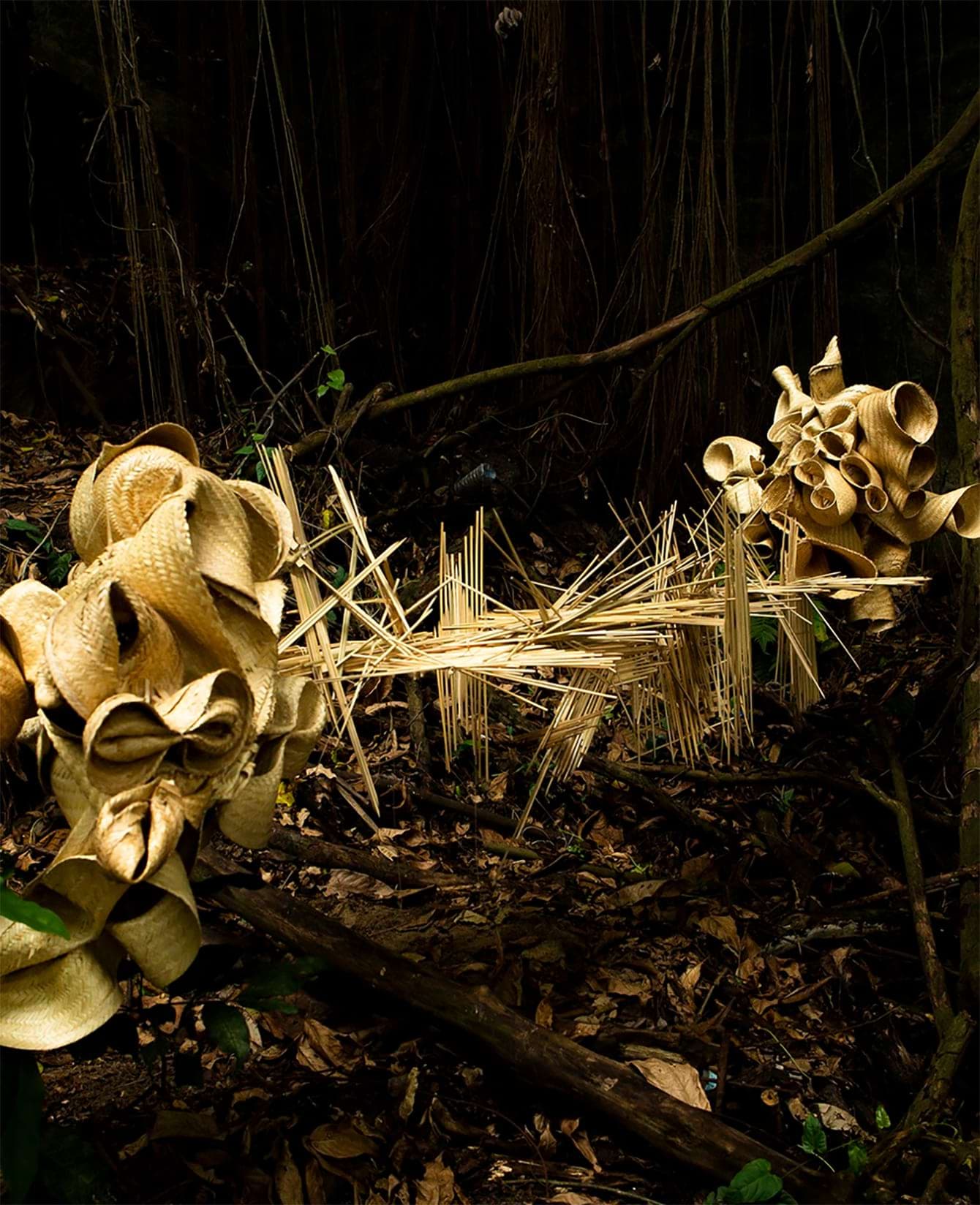
LL I was born in the interior of Minas Gerais and raised in a neighborhood of Governador Valadares, where most of the streets were still unpaved. The house we lived in was modernist. The interior of Brazil has some very peculiar characteristics. Instead of a vernacular house, my family found a modernist home in a place that had yet to be urbanized. My mother let the garden grow wild; sparrows nested in the eaves, filling the house with straw. This certainly influenced my work on Communal Nests. In addition, this house, which resembled a flying saucer, was located next to a fast-flowing river, the Rio Doce. The nature there was vibrant, as were the colors. Colors, smells, flavors, and the pulsating life of the fertile soil by the river marked my memory of the landscape. I was not born in a metropolis, so my relationship with animals was also different. When I began to organize my formal thinking in the visual arts and came into contact with art history, I became interested in the power of life and how things transform before our eyes, in the impossibility of making them static. It was from this principle that I began to think about Governador Valadares.
GG Organic matter and its transformation is also a central element to your practice. From the transformation of colour to the degradation of materials over time, you invite the temporal as an active participant in how your work manifests, both in the studio during production and once the work is presented to the public. In this way, a work may only find its final form at the end of a show or many years later as its physical appearance morphs. How do you think about time as an agent and the evolution of materials, perhaps in reference to specific works throughout your career?
LL The great strength and, at the same time, the fragility of what is alive, and often, depending on a notion of perspective, we can also consider that there is life in inorganic materials, are very important issues for me. There is also a profound formality in the concept of time when thinking about art. Time can also be applied as a concept to be understood directly by those who observe art, whether in a more obvious performative context, in front of them, as spectators or researchers of a work of art, or in another perception, in which the material, certainly alive, changes gently, but you understand it as a kind of abstraction. Art has already offered clues and intellectual and poetic possibilities for us to understand this, which is important from a political point of view. If you understand this, you engage strongly, potentially and historically, with a work of art and with art itself.
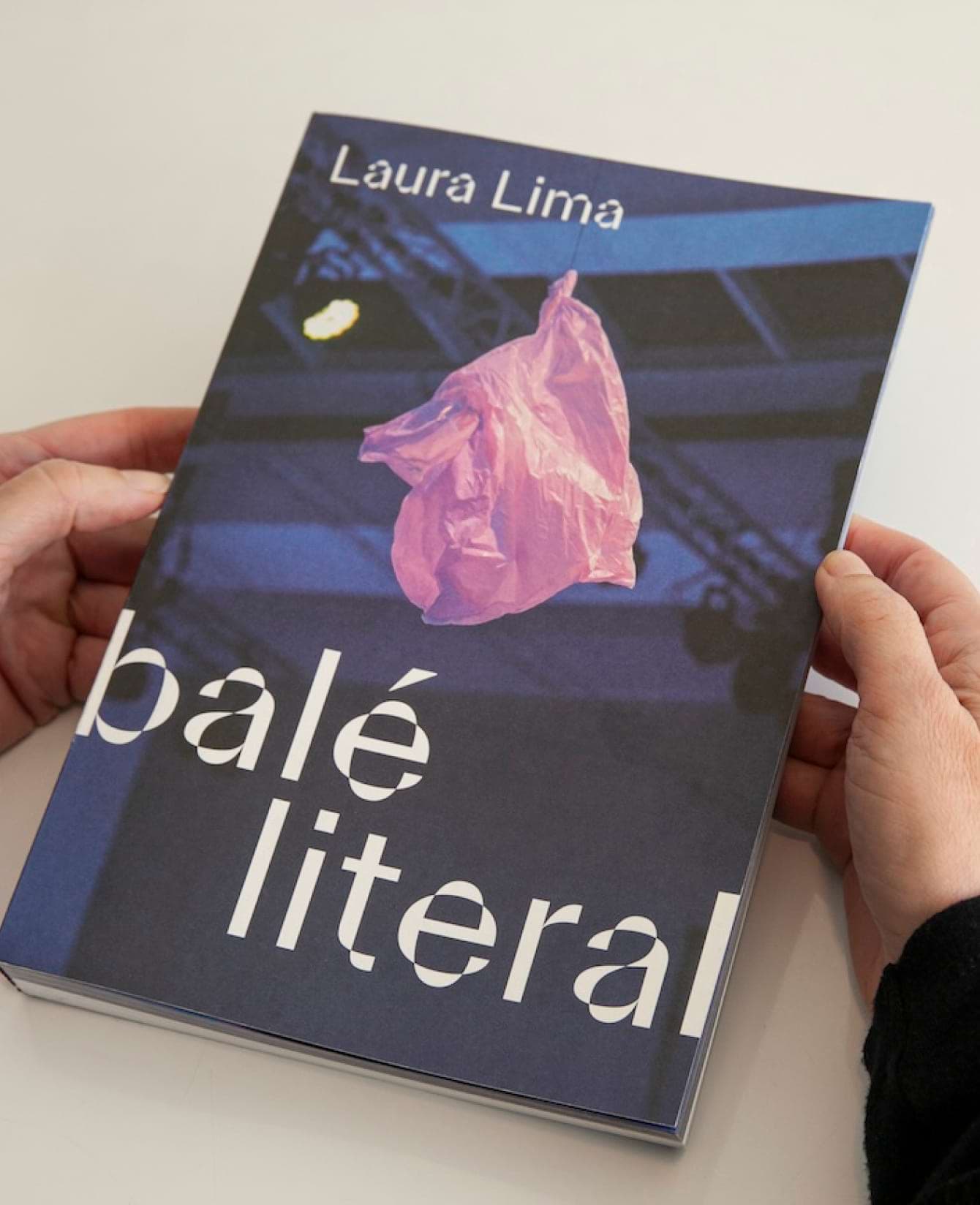
GG In 2023, before your Johannesburg show, you had a major moment at MACBA, Barcelona. On the invitation of then director Elvira Dyangani Ose you created a mechanical ballet retrospective of your work Balé Literal. The ballet is being prepared for the Paz Institute in Minas Gerais and being rethought from the point of view that it can last for years so that the public can revisit it. Can you share the thematic explorations of that work? How did it feel to revisit that work, and for it to be shown at two major institutions?
LL How was the Balé created at MACBA? The Balé was conceived to last five months, so we are talking about many thousands of hours of the continuous duration of a work that touches on the formal performative ideas of art history, while presenting itself as a dynamic exhibition. In this dynamic exhibition, we can draw from this gesture the ideas of music, light, and performance, in the sense of an acceleration of the movement of life. If we were previously discussing time, in this case it becomes accelerated, through joy, through drama, through everything we carry from the formal and historical point of view of art. But why can’t a drawing, instead of being hung on the wall, dance in front of you? And at the same time, why not walk with it, or dance with it, with music, with light, and with space for that? Rethinking the ways in which art is placed within museums and institutions is something I have been doing for many years. We can understand that I, as an artist, am not only giving instructions to those who will make the Balé happen, the Balé operators, but also to the institution itself, indicating the ways in which it should take care of this living work. As in other works of mine, I have always believed that the great commitment of an art institution is an ethical commitment to the way in which the artist presents their intellectual thought. It is at this moment that the artist and the institution meet, and the work communicates a certain drama of its existence.

GG Your work often offers philosophical, emotional and visceral explorations of the conceptual frameworks people use to make sense of the world. Can you share more about this, and how this came to be a common thread in your work?
LL It is fascinating to look at life and see how things unfold. Through language, we create attributions, categories, definitions, and even a certain methodology for conducting communication, such as reason, for example. We realize that, in the sensitivity of the world, not everything can be explained, nor can words account for it all. Music, art, and the accelerated or reasonably organized ways of conducting this process of creating languages are present in this event of the world, in this mystery of the world. For me, given that we are in a place that defines itself as art, it is not my place, nor does it satisfy me, to explain the work or create a name for it. Words can facilitate, they can be generous in the sense of bringing someone toward an idea or leading someone to it, but they will not suffice. Once it is established that something is art, a wide range of possibilities opens up. From there, what is presented, how it is presented, and where it is presented can be seen as a small, medium, or large phenomenon, or even an elusive one. This is fundamental, and therefore there are always ways, if one accepts this, to guide the gaze or to feel a work of art. It is not only what is presented; it is also how one arrives there, and for me, all of that matters.
GG Fast forward to your second Goodman Gallery solo in the London space titled Communal Nests for Windows, Balconies, Verandas, Gardens, and Forests. The heart of the exhibition is a large group of interconnected Communal Nests. Can you share the process of making and installing the works, and how they connect to what you want to communicate through the title for the show?
LL The title of the exhibition Communal Nests for Windows, Balconies, Verandas, Gardens, and Forests suggests that anyone who collects a Communal Nest from the exhibition and take it home, or into an institution’s collection, can place it near windows, balconies, verandas, gardens, or forests. If we turn to a historical relationship with art, when trompe-l’œil was discussed, paintings of fruit were constructed with such veracity that they could attract a bird, which might peck at a painted grape. But, at the same time that this object exists in nature, an animal can also shelter there, or even collaborate by building its participation upon a sculpture. These dwellings may become home to animals and, who knows, perhaps their predators. Why? Because they are common? Are they communal? Are they open to everyone? Without hierarchy, without a specific definition, can groups of the same species come to live in them? In fact, the idea that these works may be ignored by animals is also part of them. These works are made of plants, as they are constructed from straw and other natural materials. So how would they be preserved? Would they live up to their potential for as long as they were exposed to the weather, or would they be cared for and preserved? Would other hats be placed next to those that might be more fragile and that were destroyed by harsh weather: rain, sun, cold, and the passage of time to which they are exposed outdoors? Still, the work is there, intense and alive within this participation. There are possibilities for living with this, and the work also questions that idea. What does it mean to live in its power? What is it like to live with and to have this work? Can this work have a copy as a reference? Is it like a musical score? Yes, it can be a musical score, and the records can be reconstructed. If it remains outdoors and is constantly preserved, it will transform, and that is an encounter with existence itself.
GG Your gallery show is on view concurrently with your Institute of Contemporary Arts new commission and exhibition The Drawing Drawing. Together these shows mark your debut London solo presentations. The ICA show includes a scene related to Balé Literal, as well as other performative sculptural works from across your thirty-year career. Throughout the exhibition you offer suggestions and manifestations of a more expansive conceptualisation of drawing. Can you share more about your thinking for the exhibition and which works do you see as centrepieces within it?
LL With the curator Andrea Nitsche-Krupp, we brought a new work after her visit to the Balé Literal at MACBA. As soon as we began our conversations two years ago, leading up to this exhibition, she asked me what work would come after Balé Literal. At first, what happens is that I visit and revisit various works, different lines, and moments of my practice. For example, I have been thinking a lot about Communal Nests, but also about Balé Literal, among other works. Then I return and create interconnections between them. When I thought about the exhibition for the ICA, there was something specific and political about it; we were living in 2025, a very particular moment of war. From this profusion of images, a simple question came to me: how is the human outlined, this construction of what it means to be human? Or the desire to define oneself, to take possession of a definition of what is human, of what can and cannot live. How is this outlined? And, in this case, the living, isn’t it?
Somehow, the image of a life drawing class came to mind after visiting the ICA and learning about its history, and how it positioned itself as a space for experimentation with a certain radicalism. Artists who started there have become very important to the history of art in the world, especially within that European center. At that moment, I reflected on how this human being places themself; another thing that came to mind was drawing. Countless other artistic languages can arise from the simple gesture of observing the other and trying to fleetingly outline something that will never be fully captured. Humans are much more complex, and the line has its own strength. At the same time, the line of drawing is one of the most primitive gestures of communication. Any language, any people, when I am face to face with another person, openly or subtly, I can communicate through drawing, even if I do not speak the other’s language. Placing people in front of traditional and recognizable easels, drawing someone who is supposedly passive, which they are not, since they choose their position and to be there, while the proximity and distance of random movements in these pieces focus, remove, and remake the perspective. And why outline this human exactly as presented, and not everything around them? Why can't this be enhanced and become something more abstract? The entire room, all the circles, the geometries found, the dispersions, in fact, everything disperses, and the focuses are elusive. At this point, drawing becomes a strong element of this exhibition, as does losing and finding the key to the Ascenseur: losing the key, finding the key, being helped or not. Between the drawings that will only be completed in the future, Wrong Drawing, from 2084, and Frozen Images, from 1993, there is a difference of 91 years. How is continuity established after the exhibition between these works, which can melt and disappear because they are fragile connected to a power source? Meanwhile, a Parasol, torn from its Balé, wanders on the dance floor, randomly driven by continuous, repetitive music. So, this is the exhibition, these lines are given and lost.