Alexander CalderSpecial Viewing Room Presentation
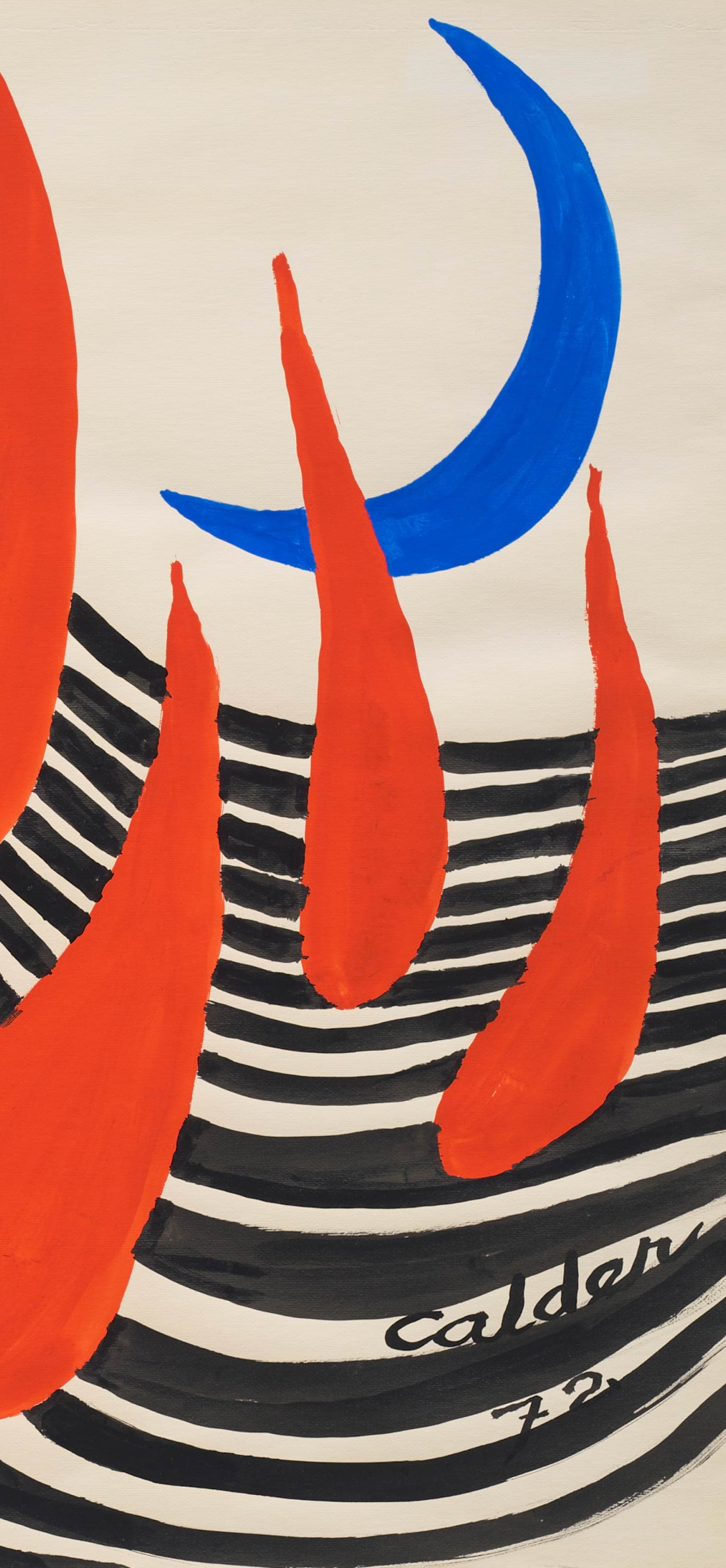
Working with spontaneity and immediacy, he employed bold black lines, luminous fields of primary color, and expansive white space to create compositions that possess the same sense of rhythm, balance, and movement that defines his sculptural oeuvre.


Featured Artworks
Create a Goodman Gallery account to view our full selection of available works, access pricing and check out online.
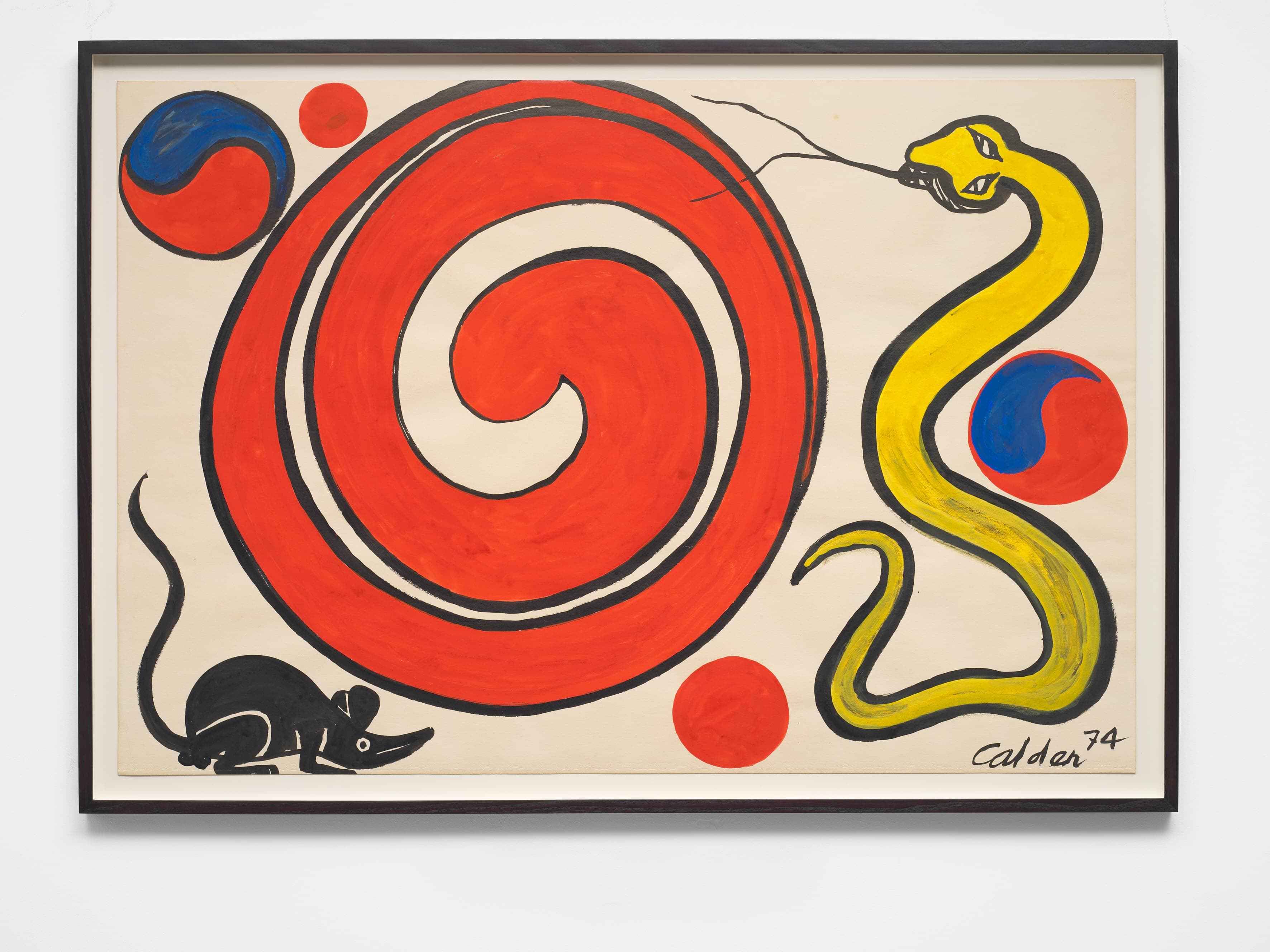
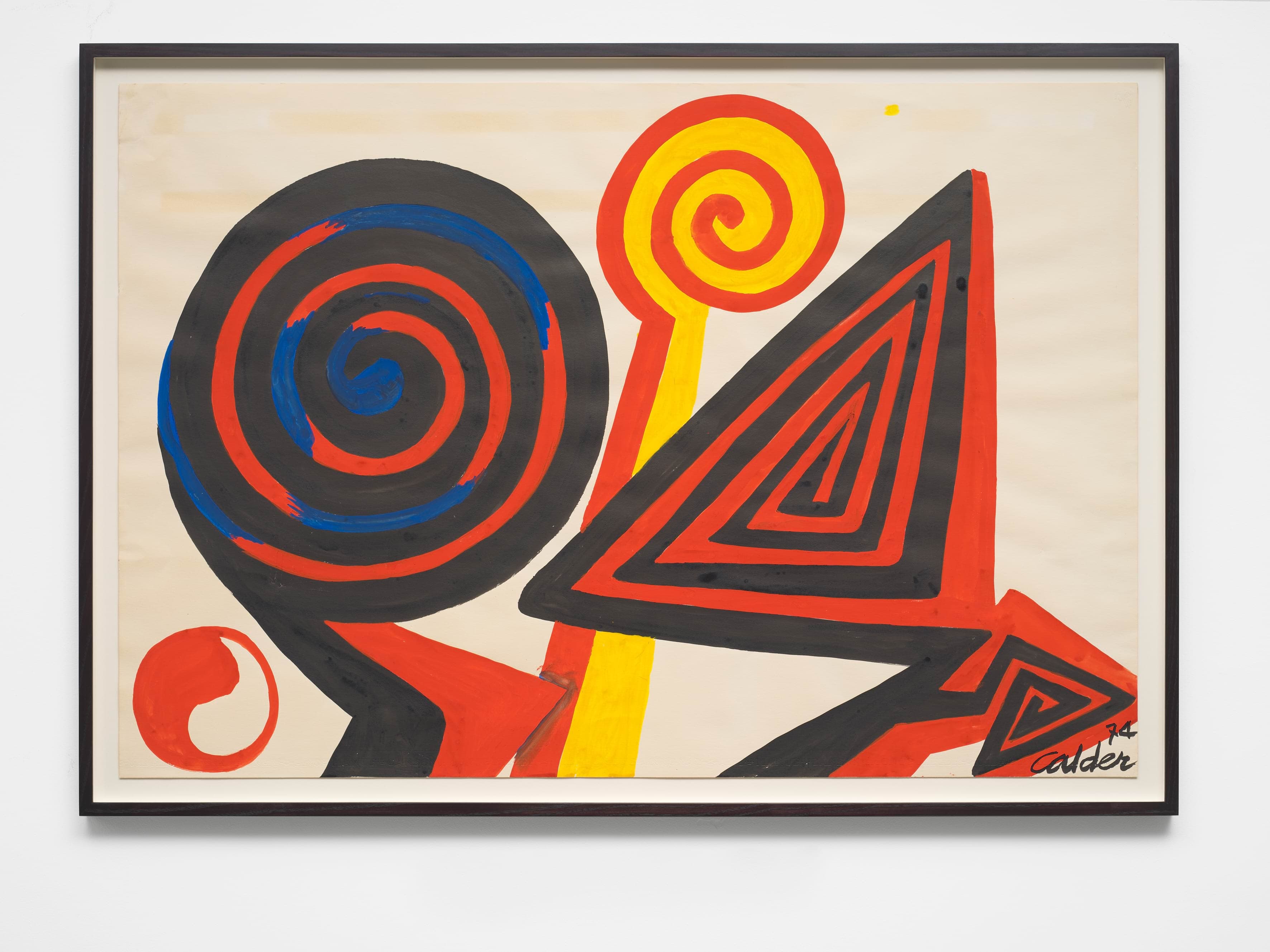
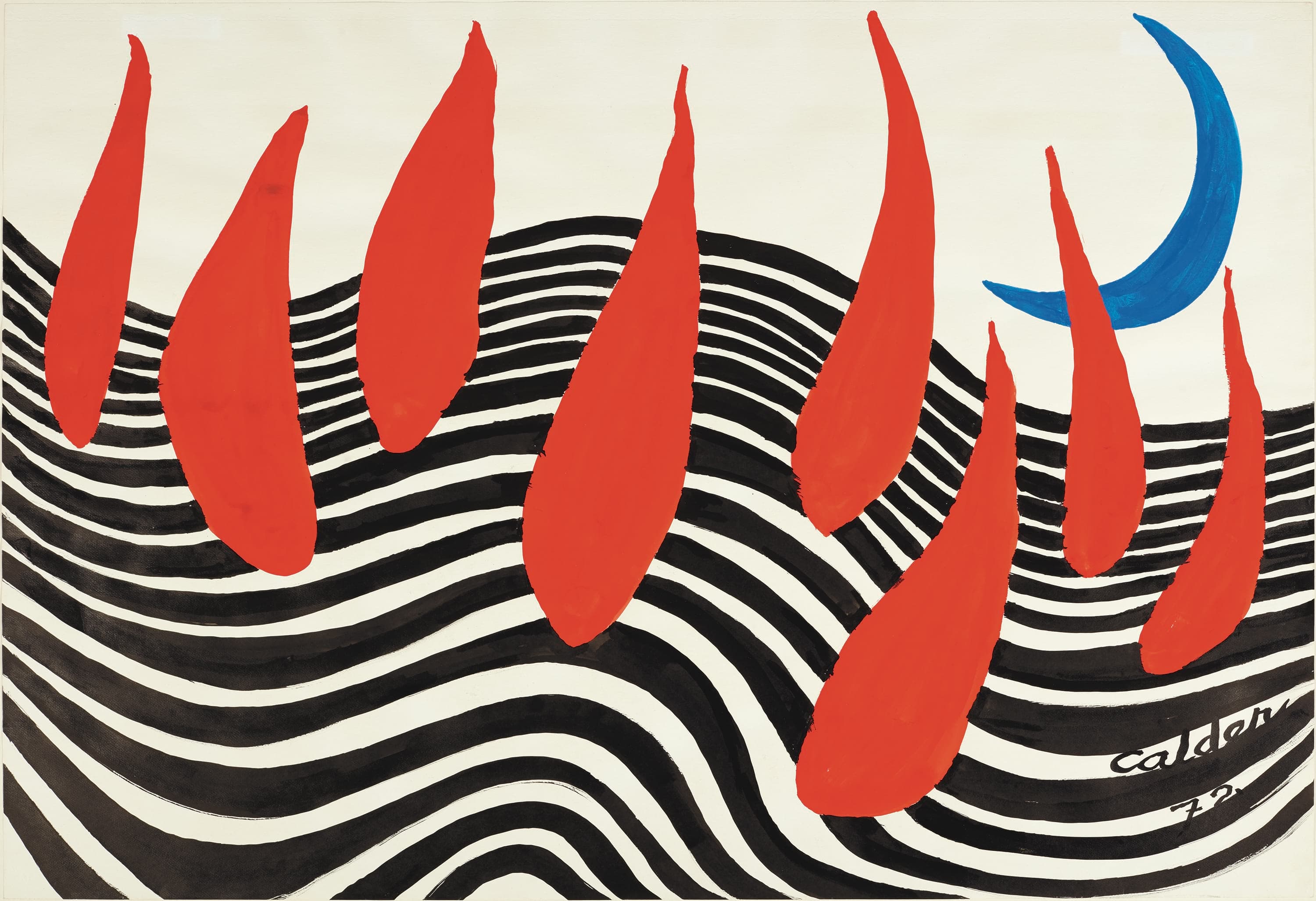
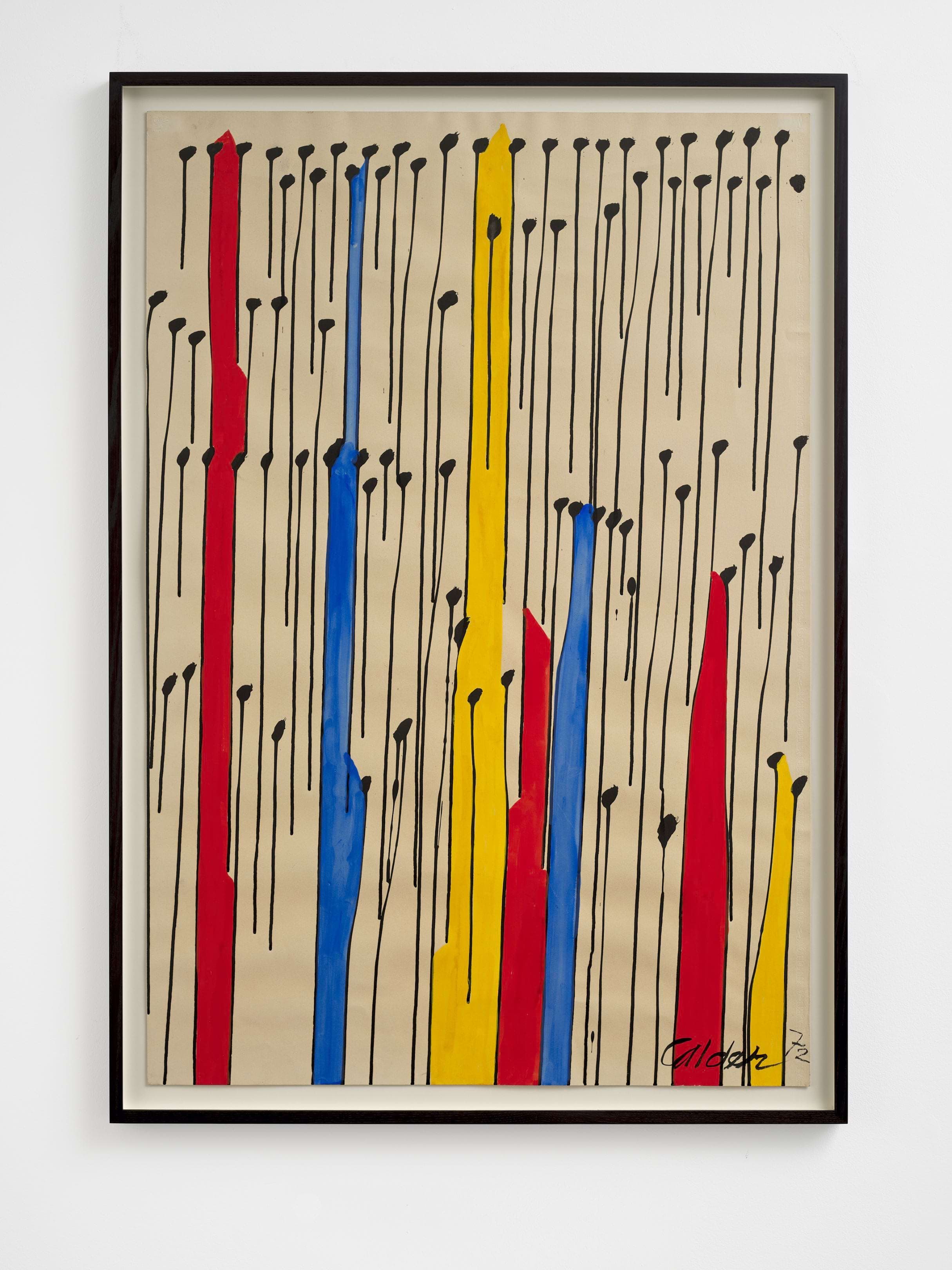
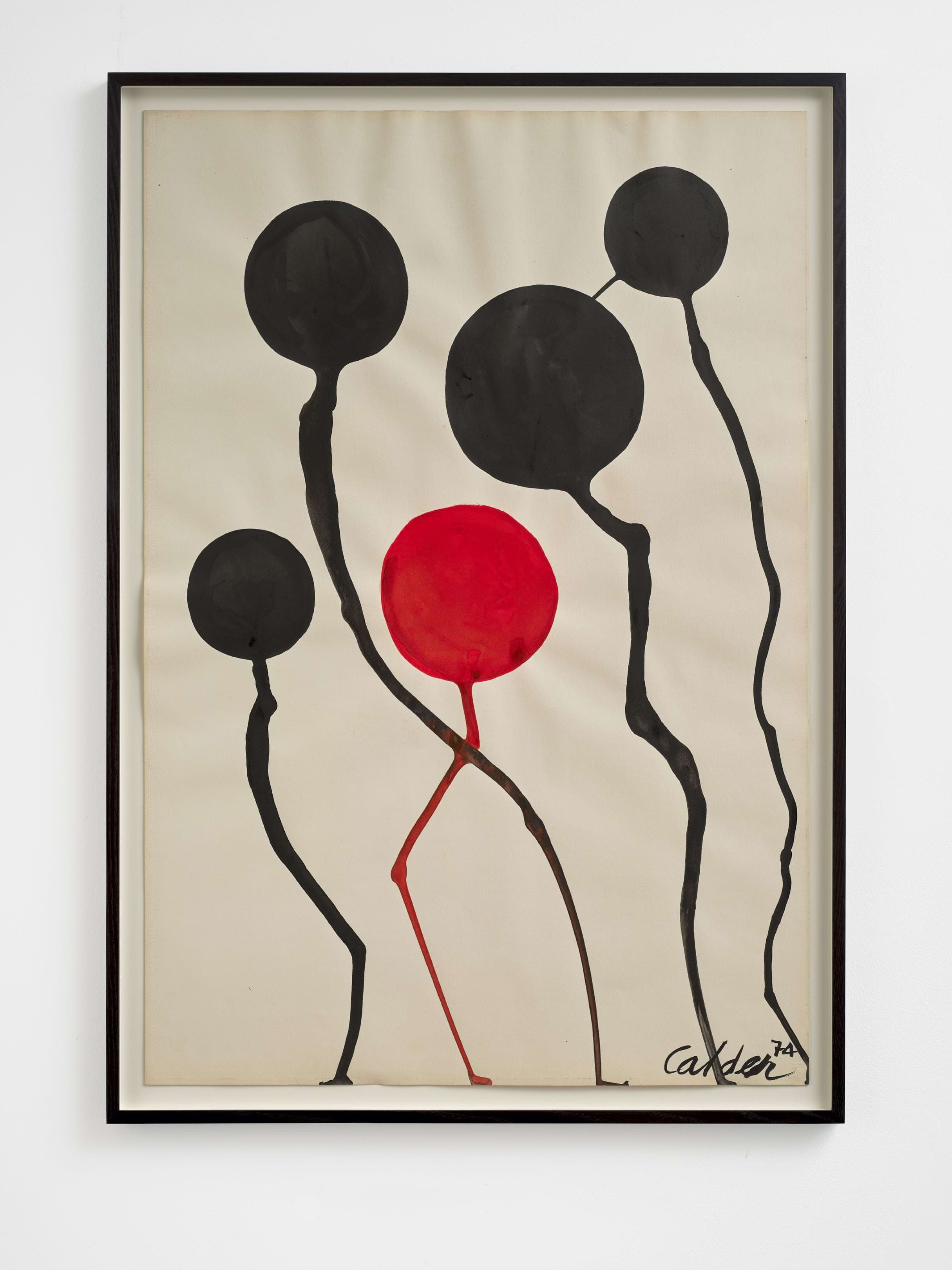
Far from preparatory studies, these works stand as fully realised abstractions in their own right. Recurring motifs, including circles, spirals, pyramids, and celestial forms, reflect Calder's lifelong fascination with geometry, nature, and the cosmos. Their apparent simplicity belies an extraordinary command of composition, where every line and plane of color is carefully calibrated to achieve visual equilibrium. The fluidity of ink and gouache allowed Calder to experiment freely, capturing a vitality and immediacy that complements the physical dynamism of his three-dimensional works.


The gouaches of the 1970s are widely regarded among the finest expressions of Calder's late practice, distilling decades of formal experimentation into compositions of remarkable clarity and confidence. They demonstrate the artist's enduring commitment to purity of line, color, and form, while offering a more intimate encounter with the inventive spirit that transformed twentieth- century abstraction. Together, they affirm that Calder's mastery extended far beyond sculpture, revealing an artist of exceptional versatility whose works on paper remain among the most compelling achievements of his career.


Artist Bio
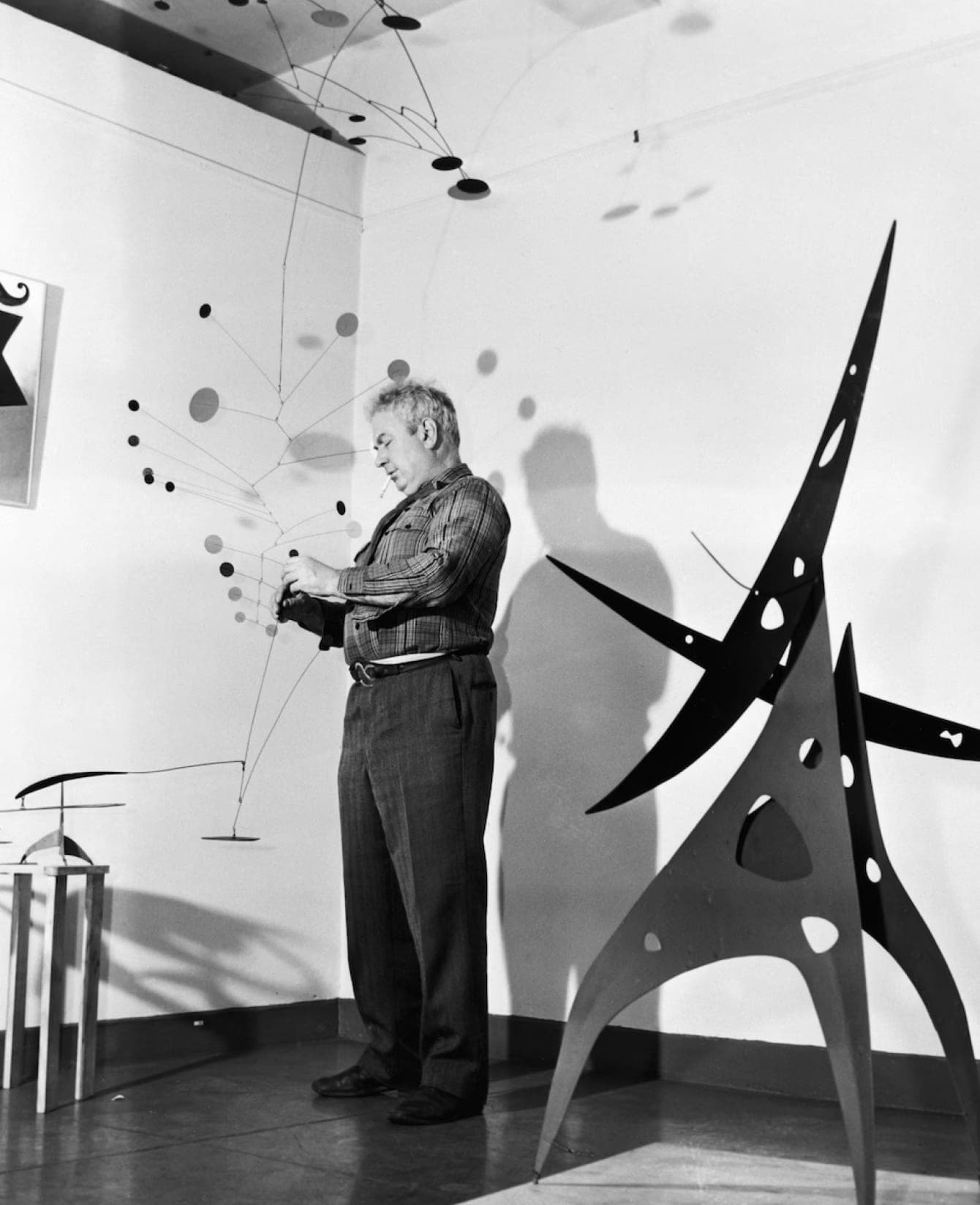
Alexander Calder (1898–1976) was an influential American sculptor best known for inventing the mobile, a type of kinetic sculpture that moves freely in the air.
Born on July 22, 1898, in Lawnton, Pennsylvania, Calder came from an artistic family. He studied mechanical engineering at the Stevens Institute of Technology before attending the Art Students League in New York.
During the 1920s and 1930s, Calder became interested in wire sculpture, abstraction, and movement. His visit to the studio of Piet Mondrian in 1930 strongly influenced his shift toward abstract art. In 1931, he began creating sculptures powered by motors and then developed his famous suspended mobiles, which move in response to air currents.
Calder also created large outdoor sculptures called stabiles, which are stationary but often have dynamic, sweeping forms. His work combined art, engineering, balance, color, and movement in innovative ways.
Throughout his career, Calder exhibited internationally and became one of the most important artists of the 20th century. His work helped transform sculpture from something static into something that could move and interact with space.
Calder died on November 11, 1976, in New York City, at the age of 78. Today, his mobiles and monumental sculptures can be found in museums, public spaces, and collections around the world.