Laura LimaCommunal Nests for Windows, Balconies, Verandas, Gardens, and Forests
The work of Brazilian artist Laura Lima has always been deeply concerned with living things, with the vibration, unpredictability, and ongoing transformation of animate matter. Across three decades, her practice has traced the thresholds between bodies, creatures, environments, and the forces that shape them. Communal Nests for Windows, Balconies, Verandas, Gardens, and Forests presented at Goodman Gallery London is a powerful continuation of that. The exhibition will coincide with The Drawing Drawing at the Institute of Contemporary Arts, both forming her debut solo presentations in the city of London.

Featured Artworks
Create a Goodman Gallery account to view our full selection of available works, access pricing and check out online.
She is resistant to the phrase “performance art”, but is rather inspired by the pivotal Brazilian Neo-Concretism of Lygia Clark, Lygia Pape, and Hélio Oiticica, who viewed performance as a flexible version of sculpture. Lima forms a crucial part of this long history in Brazil of art being participatory, bodily, and multi-sensorial. This sensibility first took shape in works such as Vaca (H=c/M=c) (1994), when Lima led a cow onto Ipanema Beach, and Fuga (Escape), where birds were released inside a gallery space to rediscover flight. In other works, she has invited cats to explore installations before public opening, and preserved meals for a future dinner decades later. She uses plant-based dyes whose pigments shift and metabolise over time, as she did in the exhibition How to Eat the Sun and the Moon (Goodman Gallery Johannesburg, 2023).


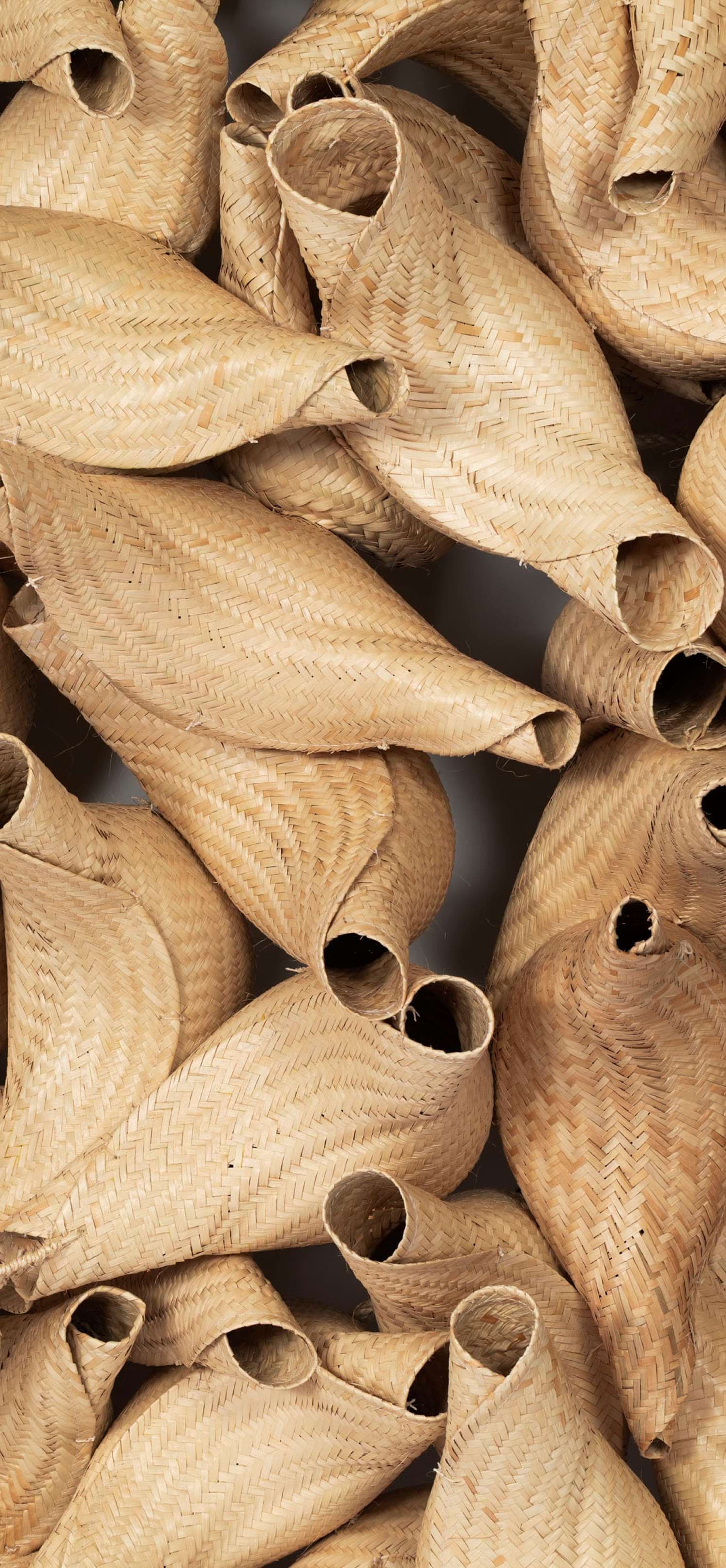
Some of these works appear here, and, at the heart of the exhibition is a large group of interconnected Communal Nests, which, as the title suggests, are ideally to be situated close to or within Windows, Balconies, Verandas, Gardens, and Forests, although here they happen to be installed in a gallery. Lima transforms a deliberately neutral space into what she calls a garden, filled with “architectural-sculptures” offering a new kind of habitat for a variety of species – birds, squirrels, rodents and even their predators. The nests are made out of straw hats, sticks, adorned perches deliberately inviting interaction, and transformation. With the straw hats, she takes something designed for and by humans, and with a simple fold recreates it as a potential home for smaller creatures. “The works inhabit the space to be harvested by the public”, explains Lima, “like a garden that invades it naturally. Each piece is a florescence that maintains a relationship with the whole, forming one large communal nest made of many communal nests. When removed and taken to the places – a garden, a balcony – they continue to offer shelter and use to other beings, like displaced flowers that continue to live in new environments.”


These are artworks one doesn’t need to be precious with. She invites those who acquire them to leave them outside, or, at the very least, close to an open window. Add fruit and water. Lead small animals to discover them, burrow in them and start to inhabit them. Document and observe their transformation. If something breaks, like one of the hats, replace it with another one. By proposing this all, not through illustration but rather playful recommendation, she not only challenges what we value, but also asks us to reimagine how to live with it. Her gestures, sometimes subtle, often radical and materially acute, reveal Lima’s ongoing interest in how living beings inhabit space, and how structures might be shaped with them rather than merely around them.
Her exhibition at the Institute of Contemporary Arts could be by an entirely different artist, illustrating her versatility. The Drawing Drawing unfolds across the Upper and Lower Galleries, integrating sculpture, movement, live performers and public participation. At the heart of The Drawing Drawing is a new interactive sculptural installation of the same name which reimagines the traditional framework of the life drawing class. It also features a well-known work by the artist: Ascenseur (2013/2016) in which a human arm reaches from underneath a wall, a set of keys just out of reach. In one small gesture, she opens up a world of possibilities.


Installation Images


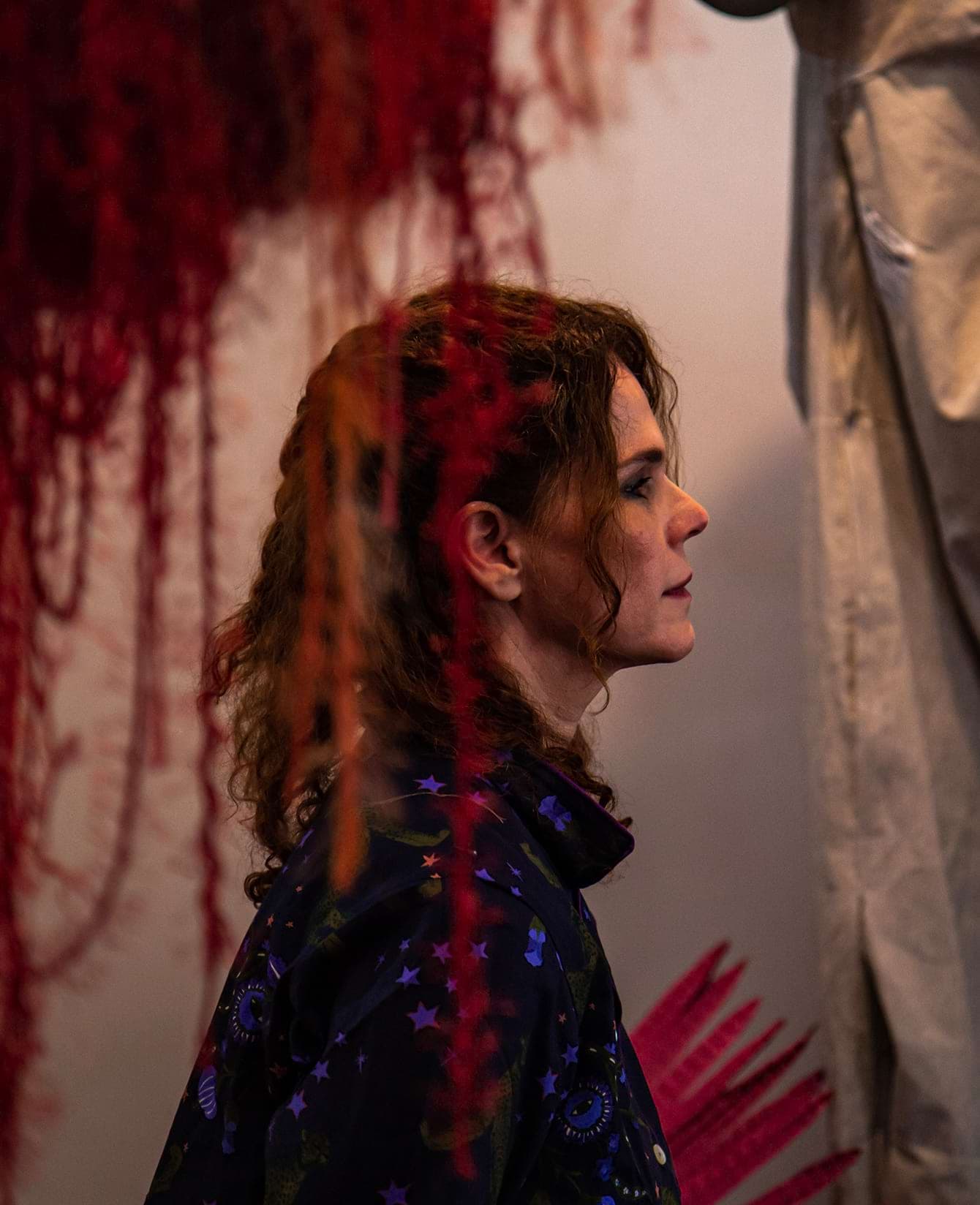
Artist Bio
Laura Lima’s (b. 1971, Governador Valadares, Minas Gerais, Brazil) practice employs a variety of media often incorporating living organisms and actions that are performed for long periods of time, to explore ways in which human behaviour alters our perception of the everyday.
Since letting a cow loose on Ipanema Beach in the mid-1990s, Lima has continued to present a body of work consisting of what she sometimes describes as ‘images’. Consistently escaping easy classification, Laura Lima’s ‘images’ are ‘neither performance nor installation nor cinema’, but rather attempts to visually link, in concrete reality, a personal glossary that the artist has worked and reworked throughout the more than twenty years of her career. Another component of Lima’s work relates to the notion of ornamental philosophy. Her work seeks to propose new understandings of accepted definitions and concepts, destabilising and subverting what is taken for granted.
In 2023, 'Laura Lima: Balè Literal', a major solo exhibition was held at MACBA, which will tour to MAM Rio de Janeiro in May 2025. A dedicated publication is due to be published later in the year by Cobogó.
Lima was the recipient of the Bonnefanten Award for Contemporary Art (BACA), in 2014, and the Marcantonio Vilaça Award in 2006. The artist was also nominated for the Francophone Award in 2011 and the Han Nefkens Award in 2012. In 2003, Lima co-founded A Gentil Carioca together with Ernesto Neto and Marcio Botner, a gallery headed by artists in Rio de Janeiro, where she still serves as a board member.
Solo exhibitions include: 'How to Eat the Sun and Moon,' Goodman Gallery, Johannesburg (2024); 'Laura Lima: Balè Literal,' MACBA Museu d'Art Contemporani de Barcelona (2023); 'Taylor Shop,' Pinacoteca do Estado, São Paulo (2018); 'Cavalo come Re’, Prada Foundation, Milan (2018); 'The Inverse,' ICA Miami (2016); 'Ágrafo,' Galeria Luisa Strina, São Paulo (2015); 'El Mago Desnudo,' MAMBA Museo de Arte Moderno de Buenos Aires (2015); 'The Naked Magician,' National Gallery of Denmark, Copenhagen (2015), and 'Bonnierskonsthall,' Stockholm (2014); 'The fifth floor,' Laureate Bonnefanten, Maastricht (2014); 'The Abstraction,' Lilith Performance Studio, Malmö (2014); 'Bar/Restaurante,' Migros Museum für Gegenwartskunst, Zurich (2013); Casa França Brasil, Rio de Janeiro (2011).
Biennales and group exhibitions include: 'Witch Hunt,' at Hammer Museum, Los Angeles (2021); Busan Biennial (2018); Sharjah Biennial (2019); 'Por aqui é tudo novo,' Instituto Inhotim, Brumadinho (2016); Trienal de Aichi, Toyohashi (2016); Performa 15, New York (2015); '15 Rooms,' Long Museum, Shanghai (2015); 'Encruzilhada,' Parque Lage, Rio de Janeiro (2015); '140 Caracteres,' Museu de Arte Moderna de São Paulo (2014); 'Por amor a la disidencia,' MUAC Museo Universitario Arte Contemporáneo, Cidade do México (2013); 'Circuitos Cruzados – Centre Pompidou meets MAM,' Museu de Arte Moderna de São Paulo (2013); Ruhrtriennale, Essen (2012); 11a Bienal de Lyon (2011).
Collections include: CACI Centro de Arte Contemporânea Inhotim, Brazil; MAM Museu de Arte Moderna de São Paulo, Brazil; Bonniers Konsthall, Sweden; Migros Museum für Gegenwartskunst, Switzerland; Pinacoteca do Estado de São Paulo.
Lima lives and works in Rio de Janeiro, Brazil.